
There are journeys that take you across landscapes — and others that move you through silence.
Traveling through Jordan belongs to the second kind.
It isn’t a destination you simply visit; it’s a place that reshapes your inner rhythm.
From the rose-red canyons of Petra to the endless stillness of Wadi Rum, Jordan offers something rare in a world addicted to noise: a dialogue between nature, history, and human humility.
The Road Into the Desert
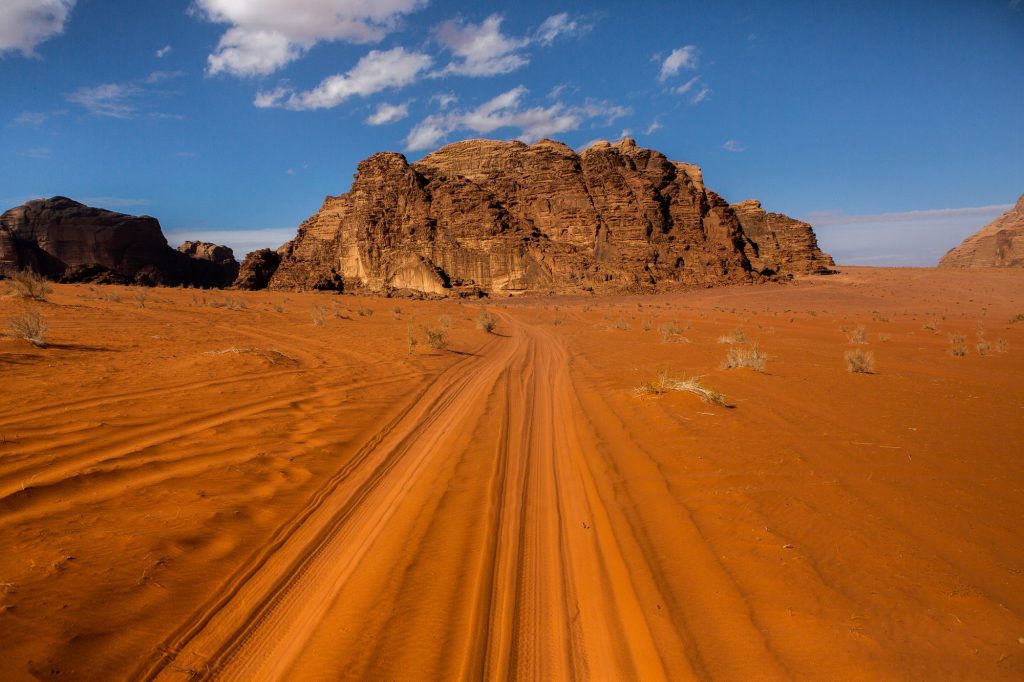
Leaving Amman, the highway south seems ordinary — until it begins to dissolve into emptiness.
The light sharpens, the air turns golden, and the first dunes appear like frozen waves.
For centuries, caravans crossed these sands carrying incense, silk, and stories.
Today, travelers follow the same path — guided not by trade but by curiosity.
The desert around Wadi Rum feels otherworldly, almost Martian. Its sandstone cliffs shift from amber to crimson as the sun arcs across the sky.
This is the “Valley of the Moon” — a landscape so vast that silence becomes its own language.
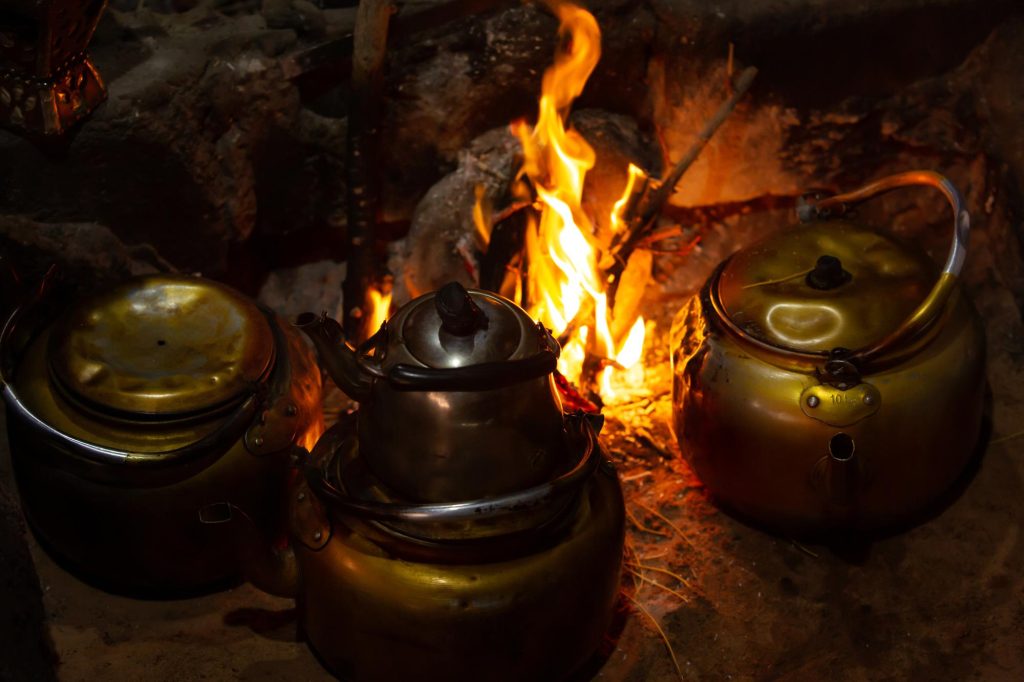
💬 Local Bedouins still call it Al-Ram, and many invite visitors into their tents for tea brewed over open fire. It’s here, under skies untouched by city light, that the modern traveler begins to understand what stillness really means.
Wadi Rum: Where Time Stands Still
The first night in Wadi Rum changes you.
You don’t sleep to city hum — you sleep to the crackle of a fire, the sound of wind brushing against dunes, and the quiet conversations of stars.
Staying in a Bedouin camp (from minimal tents to eco-luxury domes with panoramic roofs) is the heart of the experience.
There are no digital screens here, only constellations.
During the day, guides lead you through narrow canyons and natural stone arches — places where time feels paused.
At sunset, jeep tours climb the red cliffs of Umm Fruth or Lawrence’s Spring, where T. E. Lawrence once found his vision of Arabia.
💡 Insider tip: Skip the crowded sunset spots and ask locals for a private ridge. The colors of Wadi Rum at dusk can’t be photographed — they have to be remembered.
Petra: The Rose City Carved From Memory
If Wadi Rum is silence, Petra is revelation.
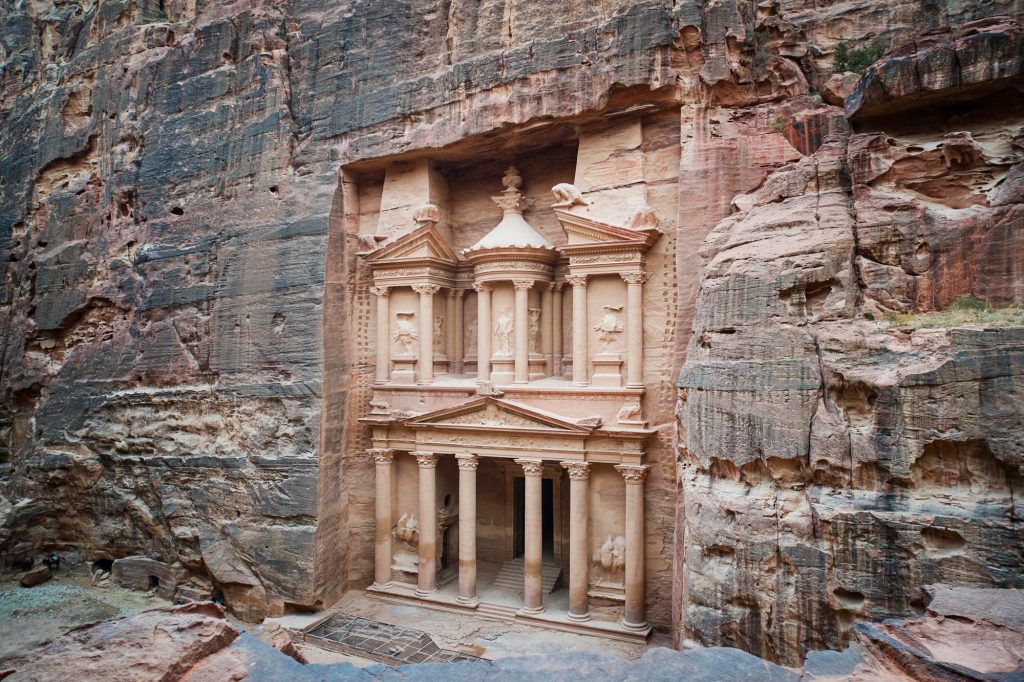
Approaching through the narrow gorge of the Siq, the first glimpse of the Treasury — Al-Khazneh — feels cinematic even if you’ve seen it a thousand times in photos.
The façade, cut from rose-red sandstone, glows alive under shifting light.
But Petra is not a single monument — it’s an entire city hidden in the rock.
Tombs, amphitheaters, stairways, and temples carved by the Nabataeans, a civilization of traders who mastered both commerce and water.
Wander beyond the Treasury, and you’ll find silence again — in the Monastery (Ad-Deir), high above the valley. Few climb the 800 steps, but those who do often stay until dusk, watching light fade over stone that still holds heat from the day.
💬 Voyazure note: The most rewarding moment comes after sunset, when the site closes to crowds. The desert breathes again, and Petra becomes what it was always meant to be — a place of spirit, not spectacle.
From Desert to Sea: The Aqaba Escape
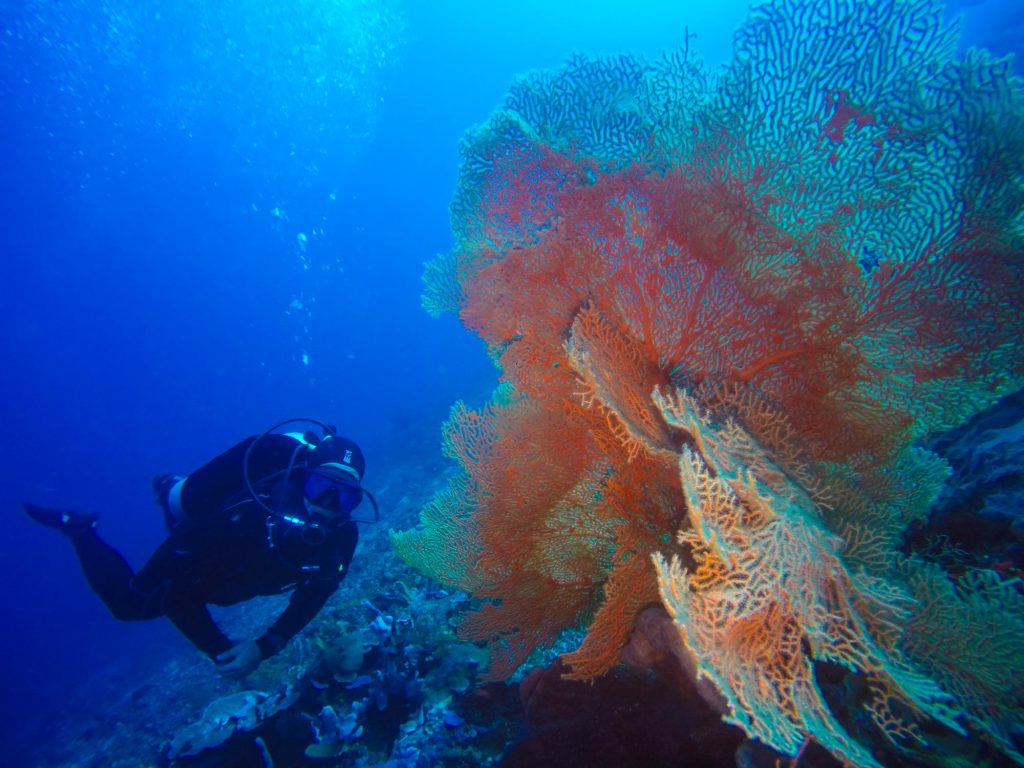
After days of sand, the Red Sea feels like rebirth.
Aqaba, Jordan’s southern coast city, is less about luxury resorts and more about rhythm — diving, fresh seafood, and evenings spent barefoot on warm pavement.
Just beneath the surface lie coral reefs alive with color — a quiet contrast to the ochre palette of the desert.
It’s the perfect ending: first the silence of sand, then the silence of water.
💡 Local tip: Head to South Beach early morning when fishermen return. You’ll see daily life unfold — coffee pots steaming on wooden boats, laughter mixing with seagull cries.
Amman: Between Ancient and Modern
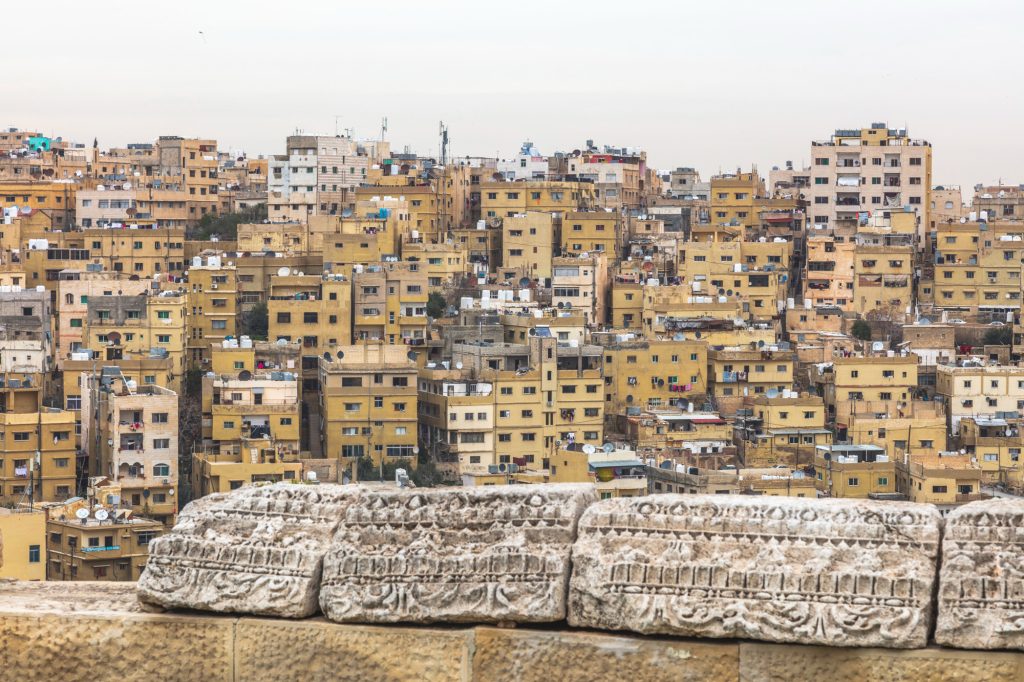
Back in Amman, the rhythm returns — but slowly.
The city’s hills hold layers of history: Roman ruins, Ottoman houses, and cafés where young artists debate identity and future.
Visit Jabal Al-Weibdeh for galleries and small design studios, or Rainbow Street for evening walks filled with scent and sound.
The contrast with Wadi Rum and Petra is striking — as if Jordan itself reminds you that silence and vitality are both part of being alive.
Practical Notes
- Best time to visit: March–May or October–December (mild weather, fewer crowds).
- Getting around: Rent a car or join guided small-group tours. Roads are safe and well-maintained.
- Currency: Jordanian Dinar (JOD).
- Dress code: Modest but comfortable; light layers for the desert and warmer clothing for nights.
- Safety: Jordan is one of the safest countries in the Middle East — locals are deeply hospitable.
💡 Sustainable travel tip: Choose eco-certified camps in Wadi Rum and local guesthouses in Petra. Tourism here sustains entire Bedouin communities — travel thoughtfully.
Why Jordan Stays With You
Jordan isn’t a checklist destination — it’s a mood. It lingers not in photos but in pauses. In the way sand holds the imprint of your steps, then erases it overnight. It teaches that adventure and peace are not opposites. In Wadi Rum, under a sky untouched by noise, you understand that travel isn’t escape — it’s return. Return to simplicity, to silence, to awe.








