
Dubai has never been a place that stands still.
It rises, shifts, reinvents — every skyline, every neighborhood, every moment a reminder that the desert can dream and make those dreams concrete.
But beneath the glitter and glass lies something older: a rhythm of wind, water, and trade that connects modern innovation with centuries of movement across the Gulf.
The City of Constant Motion
Step outside the airport, and Dubai hits you with contrast — steel towers beside desert wind, silence meeting speed.
This is not a city that grew slowly; it was built with purpose, layer upon layer. The first layer was the creek, where traders from India, Persia, and East Africa once docked wooden dhows filled with spices, pearls, and silk.
Today, that same waterway divides two worlds: Deira, the historic heart, and Bur Dubai, its mirror on the opposite bank. The air still smells faintly of cardamom and oud, and the gold souk still glitters under the same sun that once guided sailors home.
💡 Getting there: Take the Dubai Metro (Green Line) to Al Ras or use the abra — a traditional wooden boat — for just 1 dirham to cross the creek. It’s still the best way to see how the old city breathes.
Downtown and the Vertical Desert
From the creek, head south and the landscape transforms again.
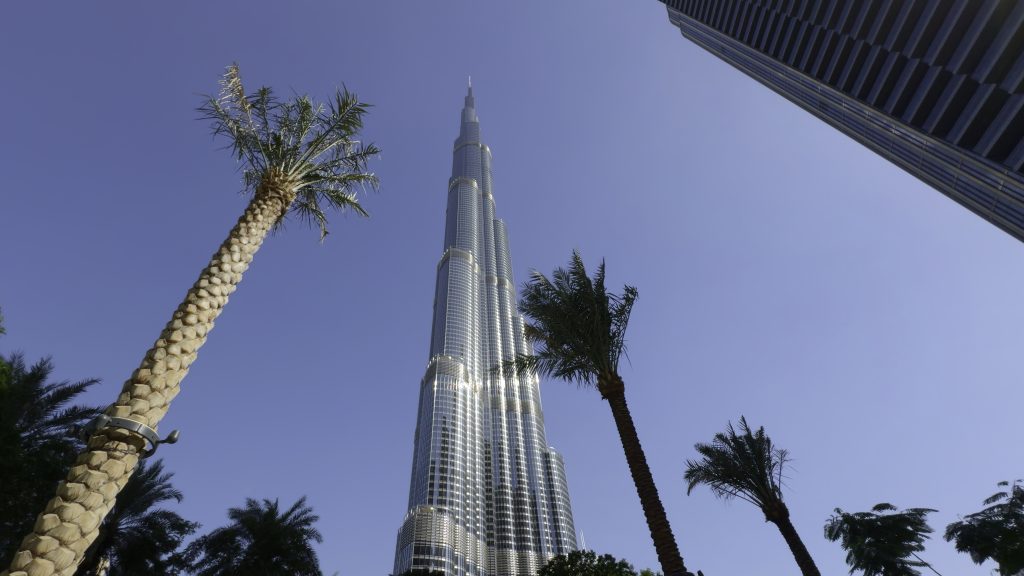
Skyscrapers rise like mirages: the Burj Khalifa, the world’s tallest building, dominates the skyline, surrounded by glass lakes and palm-lined boulevards.
At night, the city glows — not just with light, but with an energy that feels electric, even soft around the edges.
The area around Downtown Dubai isn’t just modern; it’s meticulously choreographed. The fountains dance every half hour, people gather with coffee in hand, and somewhere above, someone is dining 122 floors up.
💡 Tip: Arrive at sunset. Watch the sky fade from gold to violet from the promenade of Burj Park; then take the metro back — the Red Line stops right beneath the skyline.
Into the Desert
An hour outside the city, the sand begins to speak again.
The dunes around Al Marmoom and Lahbab stretch endlessly, rolling like waves frozen in time.
Morning light paints them silver; evening light turns them to fire.
You can ride across them in a 4×4, but the most memorable experiences are the quiet ones — a camel trek at dawn, or just sitting in the cool sand watching the sun rise behind the ridges.
For those curious about Bedouin heritage, local cooperatives in Al Marmoom Desert Conservation Reserve organize small guided walks explaining desert flora, star navigation, and old survival techniques. It’s travel stripped of spectacle — and all the more powerful for it.
💡 Getting there: Accessible by organized tour or private car from the city (40–50 min). Roads are paved up to the desert camps; bring a light jacket for early mornings.
The Cultural Heart: Al Fahidi and Al Seef
To understand Dubai, go backwards in time.
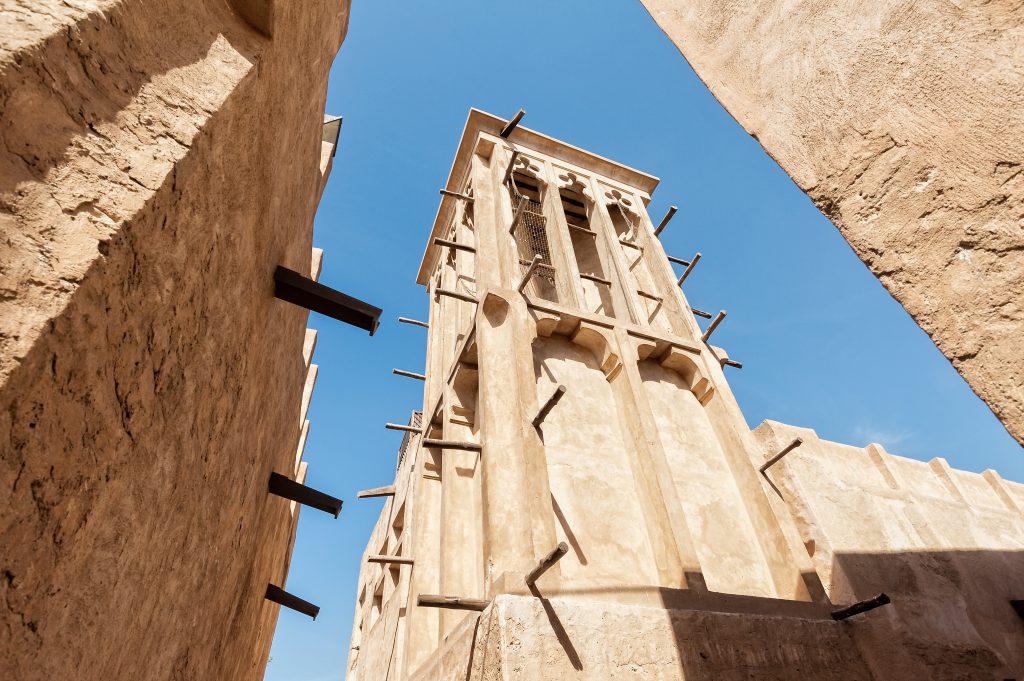
In Al Fahidi Historical District, the narrow lanes of sand-colored houses hide art galleries, tea houses, and courtyards where you can still hear the call to prayer echoing through the wind towers — ancient architectural designs that cool buildings naturally.
The Dubai Museum (temporarily under renovation) and the Coffee Museum nearby trace how trade shaped the city long before oil. Just next door, Al Seef combines restored coral-stone buildings with a gentle waterfront promenade, a reminder that progress here often nods to memory rather than erasing it.
💡 Access: Take the Green Metro Line to Al Fahidi station; the whole district is walkable and shaded.
The Coastline and the Calm
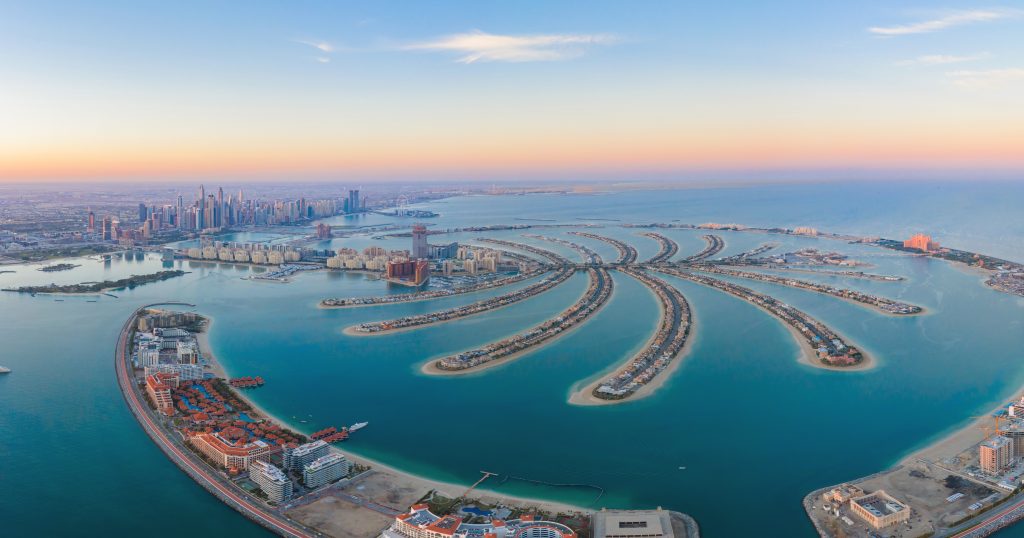
Beyond the glass and heat, the sea remains constant.
The Jumeirah coastline stretches for miles, lined with public beaches where early mornings belong to joggers and families. The water is clear, warm, and calm — a reminder that Dubai is still a city by the sea.
A short taxi ride leads to Kite Beach, with soft white sand and a skyline view that feels almost surreal. A few kilometers south, Jumeirah Fishing Harbour offers small seafood cafés where fishermen repair nets beside yachts. It’s the Dubai most visitors never see — modest, local, human.
💡 Transport: The RTA buses and the new marine transport lines connect most coastal areas; the Metro’s Red Line runs parallel to the shore.
When to Visit and How to Move
- Best season: November – March (22–28 °C, little humidity).
- Getting around: The Metro is clean, punctual, air-conditioned; taxis are plentiful. Avoid long walks at midday.
- Dress code: Light but modest clothing; respect local customs especially in mosques and traditional districts.
- Etiquette: Public affection is frowned upon; tipping is appreciated but not expected.
The Spirit of Reinvention
What makes Dubai remarkable isn’t its architecture or wealth — it’s its rhythm.
Every generation builds something new without erasing what came before: a mosque beside a mall, a desert beside a highway, a skyline rising over old harbors.
To visit Dubai is to witness a city still becoming itself — a work in progress, bold and restless, yet grounded in its desert soul.
By the time you leave, the skyline will already have changed.
And somehow, that’s the beauty of it.