
A Long-Awaited Cultural Landmark: In the golden light of a Giza afternoon, a futuristic form now rises from the desert plateau – the Grand Egyptian Museum (GEM), finally open after decades of anticipation. This massive complex, two decades in the making at a cost of around $1 billion, held its grand inauguration in late 2025[1]. Situated just 2 km from the Great Pyramids of Giza, the museum has been dubbed the “fourth pyramid” for its monumental presence and geometric design[2]. Indeed, its opening is not just a museum launch but a national milestone: envisioned as the world’s largest archaeological museum dedicated to a single civilization, GEM stands as a powerful symbol of Egypt’s cultural heritage and modern ambition. After years of construction delays and global anticipation, the doors have opened to reveal a trove of ancient wonders in a stunning contemporary setting. Visitors arriving here immediately sense the significance – this is more than a museum; it’s Egypt’s new cultural epicenter, a bridge between past and present that reasserts the country as a guardian of one of the greatest civilizations on Earth[3][4].
Architectural Marvel in the Desert
The Grand Egyptian Museum itself is an architectural spectacle, purpose-built to harmonize with the legendary landscape around it. Designed by Heneghan Peng Architects after an international competition, the museum’s shape is a vast chamfered triangle – its massive front facade of translucent alabaster and glass angles toward the Pyramids of Khufu and Menkaure, literally aligning the modern building with its ancient counterparts on the horizon[5][4]. This design creates what one observer called a “silent architectural dialogue with the ancient world,” as the museum’s light-colored, pyramid-inspired form pays homage to Giza’s old stone giants[4]. The structure occupies a site of 500,000 m² between Cairo’s outskirts and the desert, with its rear edges precisely oriented along the sightlines to the Great Pyramid and its neighbors. Approaching the museum, visitors cross a broad plaza planted with palms and crowned by the world’s first hanging obelisk – a towering granite obelisk of Pharaoh Ramesses II ingeniously suspended on supporting columns. Standing on a glass floor beneath this obelisk’s base, you can gaze up to see the pharaoh’s cartouche carved on its underside, a view hidden for 3,500 years until now[6][7]. This dramatic entry sets the tone for what lies inside.
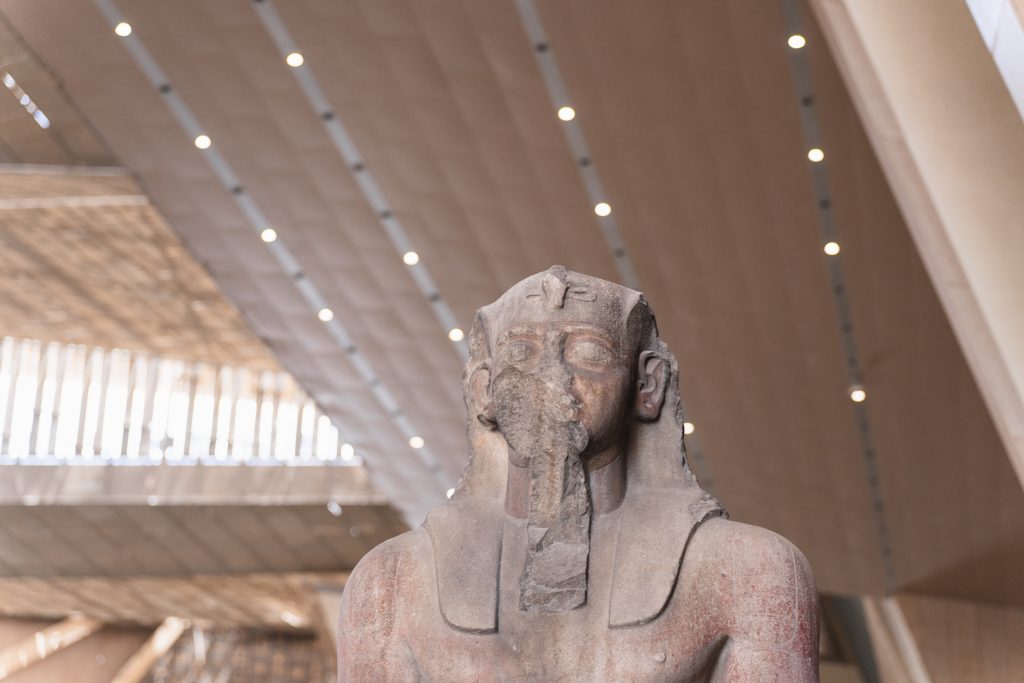
Step through the doors into GEM’s Grand Hall and you are met immediately by ancient grandeur: the 3,200-year-old colossal statue of Ramesses II, 11 meters tall and weighing 83 tons, now stands proudly in the atrium to greet all who enter[8]. Flooded by diffused natural light from above, this atrium is a cavernous space that manages to feel both modern and sacred. From here, a monumental staircase climbs upward in broad tiers, traversing the museum’s height like a processional path. Along the Grand Staircase’s edges, about 60 awe-inspiring artifacts line the ascent – towering statues of gods and pharaohs, massive stone sarcophagi that once guarded mummies, and inscribed stelae bearing hieroglyphic proclamations[9]. As you ascend these steps, each landing reveals new ancient figures looming at your sides, as if ushering you upward into the mysteries of Egyptian history. At the top of the staircase, floor-to-ceiling glass walls offer a breathtaking vista: the desert sands and the pyramids themselves just outside, perfectly framed by the museum’s architecture. It’s a deliberate design choice that blurs the boundary between the Giza necropolis and the museum’s treasures – an invitation to see the pyramids not just as distant monuments, but as part of a continuous story now told under one roof.
Treasures of an Ancient Civilization – Inside the Galleries
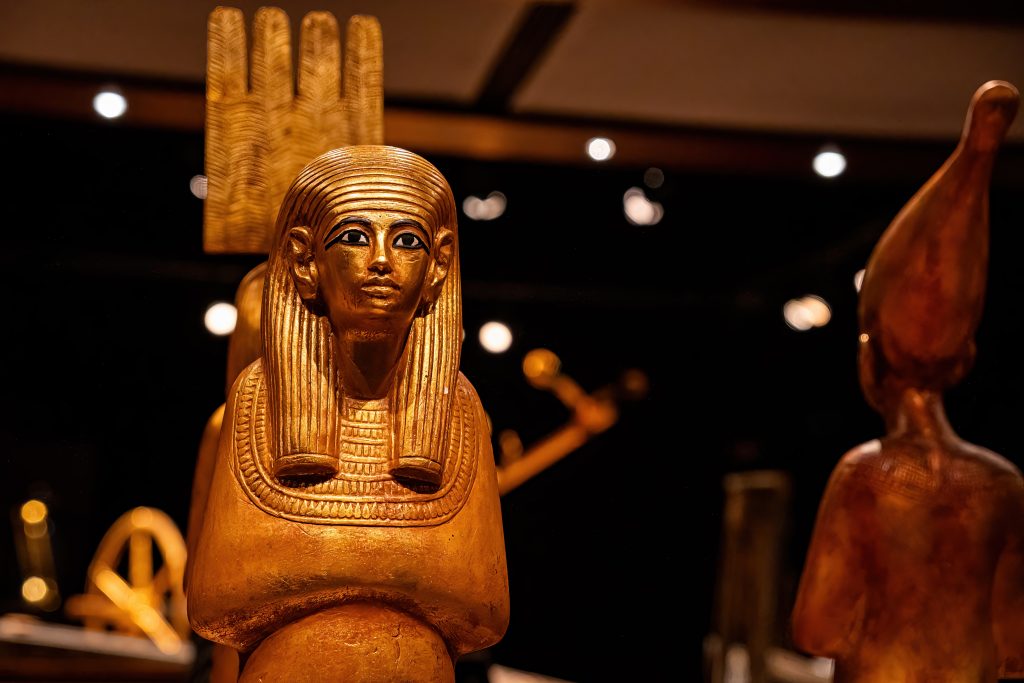
Venturing into the exhibition halls, visitors embark on a chronological journey spanning over 5,000 years, from Egypt’s Pre-Dynastic villages to the Greco-Roman era[10]. The sheer scale of the collection is staggering: over 100,000 artifacts are housed here, making GEM the most extensive museum in the world devoted to a single civilization[10]. Many of these pieces have never been displayed publicly before, emerging from decades (or millennia) of storage and excavation into the light of these modern galleries. The museum’s curators have organized 12 main exhibition halls by both era and theme – so one gallery might immerse you in the daily life, religion, and royalty of the Old Kingdom, while another highlights the artistry and power of the New Kingdom[11]. Interactive screens and ambient media enrich the experience, but it is the artifacts themselves, in all their variety and splendor, that steal the show.
At the heart of the museum, in a specially designed 7,500 m² gallery, the complete treasure of King Tutankhamun is on display in its full glory for the first time in history. Over 5,000 priceless objects from Tutankhamun’s tomb – gilded beds and thrones, ritual chariots, chests of jewelry, weapons, textiles, even the young pharaoh’s sandals – are exhibited together as a collection, something that was never possible in the old Cairo museum due to space constraints. In the soft lighting of the Tutankhamun galleries, one can finally appreciate the breadth of the boy-king’s funerary trove as Howard Carter did in 1922, but now with the benefit of modern presentation. Tutankhamun’s iconic golden death mask glitters under the lights, its inlaid blue glass and gemstones mesmerizing up close. Nearby, his nested golden coffins and exquisitely carved sarcophagi demonstrate the ancient Egyptians’ obsession with the afterlife. Many of these artifacts have undergone meticulous restoration in recent years – for example, the GEM’s conservation labs have refurbished Tutankhamun’s six sun chariots and three ceremonial beds so they can be displayed in pristine condition. To stand surrounded by these treasures, all together as their royal owner left them, is a once-in-a-lifetime spectacle for archaeology lovers. It offers a portal back to the moment of discovery and a deeper understanding of the opulence that accompanied a pharaoh’s journey to eternity.
Yet Tutankhamun’s riches are just one highlight among many in the Grand Egyptian Museum. The galleries are packed with masterpieces spanning every period of this ancient land. In one wing, you might encounter the colossal granite head of a king from the Pyramid Age; in another, admire delicate jewelry and papyri from the Ptolemaic era. Not far from Tut’s exhibit, the Khufu Boat – a 4,600-year-old cedarwood ship – takes center stage, reassembled and displayed in full after its extraction from the sands near the Great Pyramid[12]. This enormous boat, 43 meters long, was buried beside Pharaoh Khufu’s tomb to ferry him through the afterlife, and its preservation is astonishing: you can still see the ancient joinery and oar holes, a tangible link to the pyramid builders’ religious beliefs[12]. Nearby, items from the Giza and Saqqara tombs of Khufu’s relatives (such as Queen Hetepheres’s gilded furniture and grave goods) further illuminate the world of the pyramid age. The museum also showcases recently excavated finds – for instance, colorful coffins and mummies unearthed from the Saqqara necropolis in the past few years, appearing here fresh from the conservation labs. To engage a 21st-century audience, many rooms supplement the artifacts with high-tech displays: virtual reality stations let you “tour” famous tombs and temples, and augmented reality animations recreate scenes like ancient workers building a pyramid or artisans painting a tomb mural. Such features help contextualize the objects, showing how they were used or discovered, and even allow you to virtually peer inside sealed sarcophagi or fragile interiors that can’t be opened physically. The result is an immersive encounter with Egyptian civilization – at once educational and deeply atmospheric. One moment you’re nose-to-glass with the mummy of a long-ago priestess; the next, you’re touching a screen to see how embalmers mummified bodies. By the time you exit the galleries, you’ve traveled the entire timeline of ancient Egypt and met its pharaohs, workers, gods and everyday people through the things they left behind.
The Grand Staircase inside the museum is lined with statues, sarcophagi and stelae, creating a dramatic avenue into the main galleries.
Practical Information for Visitors: For travelers planning to experience the Grand Egyptian Museum, a bit of preparation will ensure a smooth and memorable visit. Location: The museum is located on the Giza Plateau on the western edge of Greater Cairo, essentially adjacent to the Pyramids. It’s roughly a 30–45 minute drive (about 20 km) from central Cairo hotels, depending on the notorious traffic. Most visitors arrive by taxi, private tour car, or ride-share from the city – ask to be taken to “Al-Mathaf al-Kabir” (the Grand Museum) in Giza. A new public transit option is on the horizon: Cairo Metro’s Line 4 is constructing a station right outside the museum gates to connect Giza to the downtown network. Until the metro is operational, however, plan for road transport. (For those flying in just to see the pyramids and museum, note that the new Sphinx International Airport, about 40 minutes away, now offers limited flights nearer to Giza’s attractions.)
Hours and Tickets
The Grand Egyptian Museum is open seven days a week. General opening hours for the main galleries are from 9:00 AM to 6:00 PM, with extended evening hours on Wednesdays and Saturdays when galleries stay open until 9:00 PM (the surrounding GEM complex and gardens remain open until 10:00 PM on those nights). The last ticket is sold one hour before closing time (5:00 PM on most days, 8:00 PM on Wed/Sat). Admission can be purchased on site, but given the expected popularity it’s highly recommended to book tickets online in advance for a specific date and time slot. The official ticket portal (visit-gem.com) is the only authorized online seller – the museum warns against third-party vendors. Prices are tiered for locals and foreigners. Foreign adult tickets cost EGP 1,450 (approximately USD 45), with discounted rates for foreign children and students around EGP 730. Egyptian citizens enjoy much lower prices (EGP 200 for adults, EGP 100 for students/children) to encourage local access. If you’re an expatriate resident in Egypt, you can also get a reduced rate (around EGP 730) by showing proof of residency. These base tickets include admission to the main galleries, Tutankhamun halls, Grand Hall, gardens, and even the separate Khufu Boat Museum on site. Additional guided tour packages are available if you prefer an expert Egyptologist to accompany you – official guided tours can be booked on the same website.
When planning your visit, aim to arrive early in the day or later in the afternoon. Not only will you avoid the largest tour group crowds, but you’ll also sidestep the midday heat if you plan to explore the outdoor pyramid area afterward. Museum insiders note that early morning or late-afternoon slots offer a calmer experience with fewer visitors, making it easier to linger at your favorite exhibits. The museum’s climate control keeps indoor areas comfortable even in summer, but remember you may be walking out to the open desert to see the pyramids. It’s wise to wear comfortable shoes and carry sun protection (hat, sunscreen) if you’ll be outdoors – the Egyptian sun can be intense, and the GEM complex itself is sprawling. You’ll find cafes and rest areas inside to recharge; the building even features picture windows with pyramid views, perfect for a coffee break with a legendary backdrop.
Accessibility
The Grand Egyptian Museum has been designed as a world-class facility with accessibility in mind. All public areas and galleries are fully wheelchair accessible, with ramps and elevators available throughout the complex for easy mobility[13]. Complimentary wheelchairs can be requested at the main entrance for those who need assistance[14]. There are accessible restrooms on every floor, and plenty of seating benches so visitors can rest their feet during the long tour. Museum staff and signage are bilingual (Arabic/English), and official audio guides or guided tours in other languages can be arranged. Security screenings are in place at the entrance, similar to airports – large bags may need to be checked at the cloakroom. Also note that photography is allowed (even encouraged, given the photogenic nature of the space), but flash is prohibited in certain areas and professional camera gear (tripods, etc.) require prior permission. Taking photos with your phone is fine in most galleries; however, in the dimly lit Tutankhamun galleries only non-flash mobile photography is permitted to protect the artifacts. Lastly, plan to spend at least half a day at GEM – the collection is enormous and the experience is richly layered. Many visitors will find that 4–5 hours slip away easily inside the museum. Fortunately, there are on-site amenities to make a full day comfortable: a range of restaurants and cafés (some with terraces looking out toward the pyramids), gift shops selling quality souvenirs and books, and even a children’s museum section to engage young visitors. By late afternoon, as you step back outside, you’ll likely still be digesting all the history and wonder you’ve just witnessed.
In the Footsteps of Pharaohs – Pyramids in Context: Walking out of the museum and gazing across the highway, the trio of Great Pyramids suddenly feel more than just stone marvels – they feel alive with context and meaning after the narratives inside GEM. The museum experience truly enhances one’s understanding of the Giza pyramids and their place in history. These pyramids – the tombs of Pharaohs Khufu, Khafre, and Menkaure (circa 2560–2510 BCE) – are the zenith of Old Kingdom engineering and spiritual belief, but on-site their story can seem silent, even inscrutable, to a casual observer. At GEM, however, you’ve encountered the world that built them. You’ve seen a pharaoh’s funerary boat, the jewelry of queens, the statues of gods that guarded tombs, and interactive media showing how pyramid builders quarried stone and aligned monuments with the stars. All of this creates a richer appreciation when you stand before the Great Pyramid of Khufu – which, incidentally, is the only surviving Wonder of the Ancient World[15]. Instead of just pondering its massive shape, you might recall the artifacts in the museum: the intricate model boats, ceremonial beds, and food containers that once filled chambers deep inside pyramids like this. The Grand Egyptian Museum, in essence, acts as the voice for these ancient monuments. Through its exhibits and films, the pyramids are no longer just giant mysteries on the Giza plateau; they become monuments with human stories – of kings who envisioned them, workers who built them, and priests who conducted rituals within them.
GEM’s proximity to the Giza Pyramid Complex is a deliberate masterstroke. A landscaped pedestrian promenade now links the museum to the foot of the pyramids, allowing visitors to literally stroll from the galleries straight to the pyramid of Khufu in a matter of minutes. (Electric shuttles also run along this bridge for those who prefer to ride in the shade of solar-powered carts.) This physical connection between museum and monument means you can seamlessly integrate the two experiences. Many travelers choose to tour the pyramids and Sphinx in the morning, then cross over to the museum’s cool halls for the afternoon – or vice versa. It’s now easy to spend a full day on the Giza Plateau immersed in both its open-air wonders and indoor treasures. The synergy between the site and the museum truly deepens the educational impact: for example, after climbing down into one of the pyramid burial chambers, you can head to GEM to see the actual 4,500-year-old wooden boat of Khufu that was discovered near that pyramid and learn how it was meant to serve the king in the afterlife[8]. Or, having observed the enigmatic expression of the Great Sphinx up close, you can find in the museum’s statuary collection other depictions of Pharaoh Khafre (to whom the Sphinx is attributed) and compare the artistic styles. The museum even hosts mixed-reality displays that reimagine sites like the Giza Sphinx temple or queen’s pyramids as they once were, helping visitors visualize faded features and colors. For those interested in the broader picture, GEM also shines a light on how the Giza pyramids are part of a continuum of royal tomb design – in one gallery you’ll see reliefs and models of Djoser’s Step Pyramid at Saqqara, the earlier form of pyramid that directly led to Giza’s smooth-sided giants[16]. That first pyramid, built around 2650 BCE, is a focal point of the Old Kingdom exhibits, underscoring how architectural genius evolved from the tiered stone mastabas to the triumphant geometry of Khufu’s Great Pyramid. By situating Giza in this wider narrative, the museum transforms a visit to the pyramids from a simple wow-moment into a deeper comprehension of ancient Egyptian civilization’s development.
Perhaps most importantly, the museum brings back a sense of human scale and creativity to sites like Giza. It reminds us that the pyramids were not lone wonders that appeared out of the sand – they were the centers of vibrant cities of workers, priests, and officials. In the galleries you see their tools, their hieroglyphic records, the art they created to adorn tombs. This contextualization can be profoundly moving. Standing again outside in front of Khufu’s hulking pyramid of limestone blocks, you might picture the scenes shown in GEM’s exhibits: an army of laborers hauling blocks up ramps, engineers and priests aligning the monument with Orion’s belt, artists carving the fine statues you saw on the Grand Staircase. The pyramid becomes not just a feat of engineering but the cumulative effort of a civilization striving for eternity. In this way, the Grand Egyptian Museum fulfills its promise as more than a repository of artifacts – it is a storytelling institution that amplifies and interprets Egypt’s iconic monuments for new generations. As one museum official noted, “We’re using the language that Gen Z understands … rather than old labels,” employing technology and design to make ancient history accessible and compelling. The result is that a visit to Giza in the 21st century can engage all the senses and intellect: you feel the heat radiating off the pyramid stones, see the treasures that survived within them, and hear the ancient voices through the museum’s curated narratives.
Beyond the Museum: Completing Your Egyptian Journey
While the Grand Egyptian Museum is undoubtedly the crown jewel of Giza’s modern attractions, it’s only one part of a rich tapestry of experiences awaiting travelers in Cairo and its surroundings. To fully round out your itinerary, consider pairing your GEM visit with these complementary sights and activities that capture the essence of Egypt’s past and present:
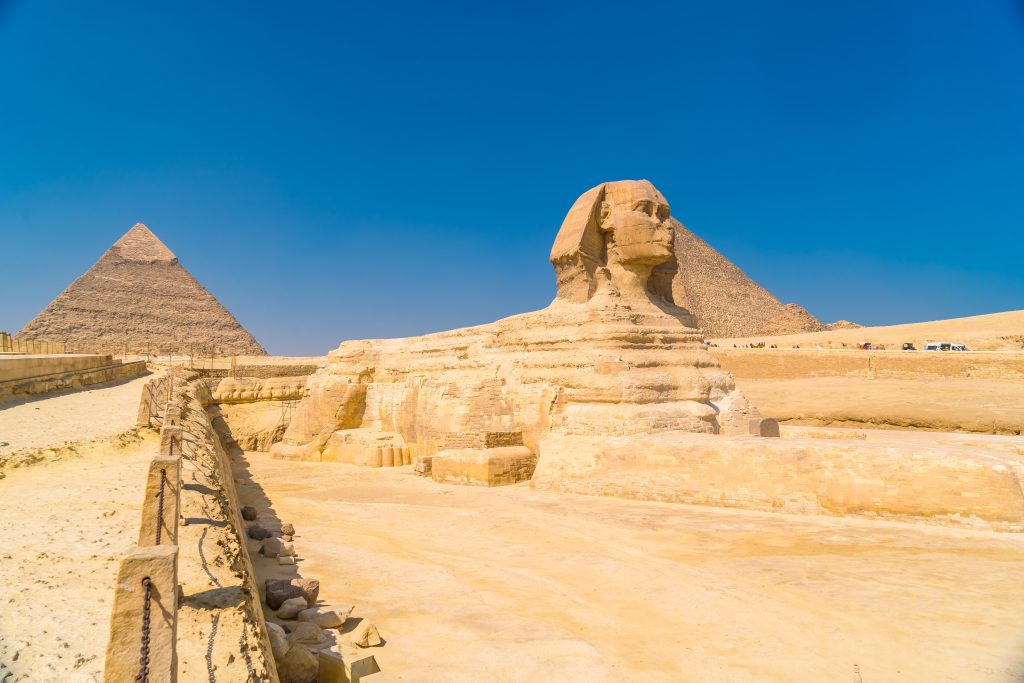
The Great Pyramids & The Sphinx: No trip here is complete without spending time at the Giza Pyramids Complex itself. Just outside the museum, the pyramids of Khufu, Khafre, and Menkaure have stood for 4,500 years, astounding all who gaze upon them. You can hire a guide or camel for a circuit around the plateau – from the massive Great Pyramid (which you can enter via a narrow tunnel to the King’s Chamber, if you’re adventurous and not claustrophobic) to the slightly smaller but still impressive Pyramid of Khafre, easily recognized by its cap of original casing stones gleaming at the summit. The Great Sphinx sits crouched to the east of Khafre’s pyramid, eternally guarding these royal tombs with its lion’s body and human face. Carved from bedrock and standing about 20 meters tall, the Sphinx is an awe-inspiring sight especially in the late afternoon, when shadows play across its enigmatic features. Seeing the Sphinx’s weathered paws and inscrutable smile up close, you can better appreciate why it has captivated imaginations for millennia. In the evening, the Giza site offers a popular Sound-and-Light Show (in various languages on different nights), where the pyramids are illuminated in shifting colors against the night sky as a voice-of-the-sphinx narrates stories of ancient Egypt. It might be a bit theatrical, but under the stars with the desert breeze blowing, it’s a goosebump-inducing way to cap your pyramid day.
Saqqara and Memphis: If Giza whets your appetite for pyramids, a day trip to Saqqara is highly recommended. Saqqara, about 20 km south of Giza, was the necropolis for the very first capital of Egypt (Memphis) and is home to the Step Pyramid of King Djoser, the world’s oldest monumental stone pyramid[16]. Built in the 27th century BCE by the visionary architect Imhotep, this six-tiered pyramid is markedly different in style from the Giza pyramids yet no less fascinating. Recent restoration has opened access to its internal passageways and a blue-tiled burial chamber deep underground. Around Djoser’s pyramid stretches a vast complex of tombs and temples – you can wander through the roofed colonnades of Djoser’s ceremonial court and see the finely carved wall reliefs in the tombs of nobles like Mereruka and Kagemni, which vividly depict daily life in the Old Kingdom. Saqqara has a tranquil, open feel with far fewer tourists, so exploring here often feels like stepping back in time. Just a short drive from Saqqara is Memphis, the ancient capital itself (today called Mit Rahina), where an open-air museum showcases statues recovered from the area, including a colossal fallen statue of Ramesses II and the alabaster Sphinx of Memphis. While Memphis is largely ruins, it provides context as the once-bustling city that served the pyramid complexes. Together, Memphis and Saqqara (a combined UNESCO World Heritage site along with Giza) offer a broader view of pyramid evolution and ancient city life – pieces of the puzzle that GEM’s exhibits also cover. Many tours bundle Giza, Saqqara, and Memphis in one long day, or you can hire a car/guide to do the circuit at your own pace.
Cruising the Nile in Cairo
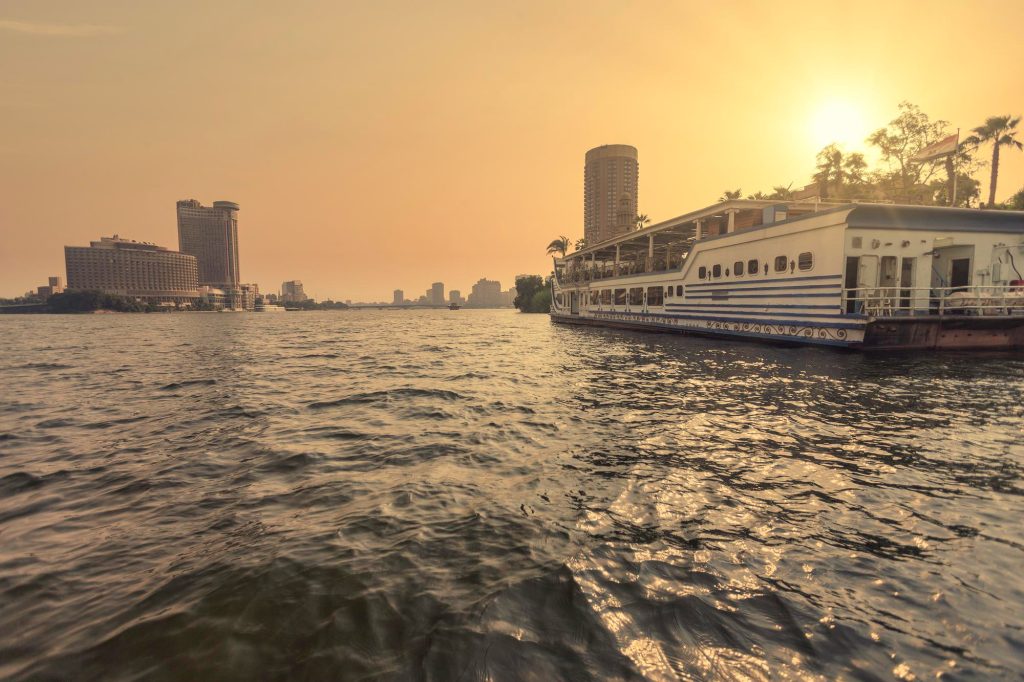
After immersing yourself in 5,000 years of history, a change of pace is in order. A classic way to unwind and absorb Cairo’s atmosphere is to spend an evening on the River Nile. The Nile isn’t just a distant icon here; it’s the living artery of the city. You might book a dinner cruise on a traditional style floating restaurant boat, where you’ll drift along Cairo’s illuminated skyline while enjoying a buffet of Egyptian cuisine and perhaps live music or a belly-dancing show. Some boats offer top-deck seating so you can feel the night air and watch the city lights sparkle on the water. If large cruise boats aren’t your style, consider a more intimate felucca sailboat ride. Feluccas – white-sailed wooden boats – can be hired by the hour from docks in Downtown Cairo or near Maadi. As the felucca glides silently on the Nile’s currents at sunset, you’ll see families fishing on the banks and the silhouettes of Cairo’s high-rises giving way to twilight. It’s a serene, almost timeless experience that balances the intensity of museum and pyramid exploration. Sipping mint tea as your felucca captain catches the evening breeze, you might reflect on how this same river sustained the civilization whose relics you’ve been admiring all day.
Markets and City Life
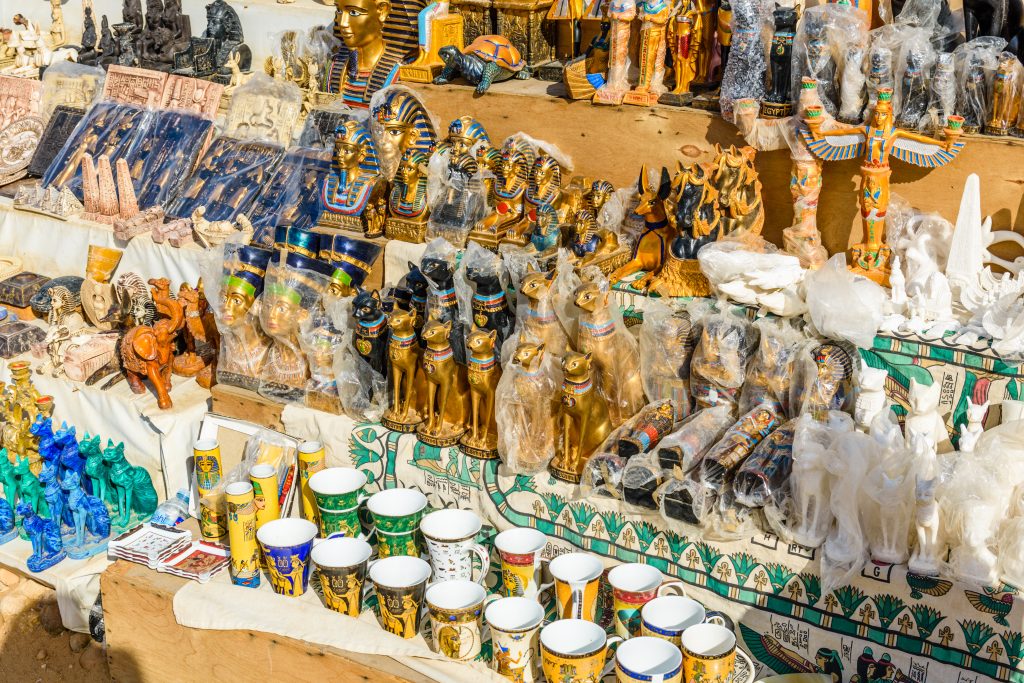
To engage with Egypt’s vibrant present (which often feels like a continuation of its rich culture), dive into Cairo’s famous Khan el-Khalili bazaar. This sprawling marketplace in the historic Islamic Cairo district is a feast for the senses and a great place to pick up souvenirs or simply people-watch over a cup of hibiscus tea. Wandering its narrow lanes, you’ll find everything from hand-hammered copper lamps and aromatic spice pyramids to alabaster statues reminiscent of those in the GEM (albeit souvenir-sized). The souk dates back to the 14th century, and its ancient domed gateways and caravansary courtyards transport you to the medieval era. Bargaining with the shopkeepers – all in good humor – is almost a sport here. Even if you’re not buying, the ambience is worth soaking up: the call to prayer echoing from nearby Al-Hussein Mosque, the clink of tea glasses on metal trays, the swirl of Arabic and French and English in the air as tourists and locals haggle. Tucked within Khan el-Khalili is the landmark El-Fishawi’s Coffeehouse, operating for over 200 years, where you can sit on plush benches, puff on a shisha (water pipe), and watch the world go by as countless writers and artists have done. For a more modern shopping experience, Cairo offers everything from bustling produce markets like Ataba (if you want to see everyday commerce in action) to upscale galleries in Zamalek featuring contemporary Egyptian art. And if you have additional museum appetite, Cairo proper has more to see – the Egyptian Museum in Tahrir (the historic 1902 pink edifice) is still open, now showcasing a rotating selection of antiquities and new thematic exhibitions as it redefines its role alongside GEM. The National Museum of Egyptian Civilization (NMEC) in Fustat is another recent addition, home to the royal mummy collection. But if your time is limited, focus on experiencing Cairo itself: take a walk in the old city at Muizz street to admire Mamluk-era mosques and mansions, or relax in the evenings with Cairo’s vibrant dining scene along the Nile corniche.
As you craft your Voyazure-worthy itinerary, you’ll find that the Grand Egyptian Museum is the dazzling centerpiece around which many other adventures orbit. Perhaps start your day with sunrise at the Giza pyramids – the crowds are thin and the desert light soft and magical as it illuminates those hulking structures. Then enjoy a late morning immersing in GEM’s galleries, where the air conditioning and cafe give relief from the heat and the artifacts provide intellectual feast. In the afternoon, venture to Saqqara’s open sands to see where pyramid-building began, or if you prefer, return to your hotel for a rest by the pool. Come evening, celebrate your trip with that Nile cruise or a leisurely dinner in a Zamalek bistro overlooking the river, recounting the highlights of your day.
Immersive, Informative, Unforgettable: The Grand Egyptian Museum and its surroundings offer a travel experience that engages both heart and mind. There is a sensory richness to it all – the sight of golden treasures and towering pyramids, the sound of prayers and market haggling, the taste of spicy falafel and sweet mint tea after a long day of exploration. For mature, culturally curious travelers, this is Egypt at its most alluring: ancient history presented with modern flair, grand monuments contextualized by world-class storytelling, and genuine encounters with local culture at every turn. As you leave the GEM complex after nightfall, you might catch a last glimpse of the pyramids lit in the distance and the museum glowing warmly – old and new beacons side by side. It’s a scene that encapsulates what makes this destination so special. Egypt’s past is never just in the past; it’s here, living and evolving, inviting you to be a part of its next chapter. The Grand Egyptian Museum, in all its grandeur and detail, ensures that chapter will be one for the ages – and you’ve now experienced its opening pages firsthand[4][17].
Sources:
- ArchDaily – “The Grand Egyptian Museum Fully Opens, Completing Giza’s New Cultural Landmark”[18][19]
Egyptian Streets – “Everything You Need to Know About the Grand Egyptian Museum Opening”- Associated Press – “The Grand Egyptian Museum… is finally opening”
- Al Jazeera – “A look inside Egypt’s newly unveiled Grand Egyptian Museum”[20][9]
Monocle Magazine – “Cairo’s new Grand Egyptian Museum…ambition and inertia”[4][17]
Official GEM Ticketing Site – Visitor information (hours, tickets, policies)
Egypt Today – “World’s 1st hanging obelisk installed in GEM”[6]
UNESCO World Heritage Centre – Memphis and its Necropolis (Pyramids fields)[15][16]
[1] [2] [5] [8] [9] [10] [11] [20] A look inside Egypt’s newly unveiled Grand Egyptian Museum | Arts and Culture News | Al Jazeera
[3] [4] [17] Museums should ask questions. But does Cairo’s new Grand Egyptian project provoke too many? – Monocle
[6] [7] World’s 1st hanging obelisk installed in the Grand Egyptian Museum – EgyptToday
[12] The Grand Egyptian Museum showcasing 50,000 artifacts is finally opening | The Associated Press
[13] Opening night – Enterprise News Egypt
[14] The Grand Egyptian Museum: A Model of Inclusion for People of …
[15] [16] Memphis and its Necropolis – the Pyramid Fields from Giza to Dahshur – UNESCO World Heritage Centre
[18] [19] The Grand Egyptian Museum Fully Opens, Completing Giza’s New Cultural Landmark | ArchDaily