
On the occasion of its 100th anniversary, the Gennadius Library of the American School of Classical Studies presents the commemorative exhibition “Gennadius 100: A Century of Inspiration,” featuring exhibits such as the first edition of Homer and Greece’s first Constitution.
The exhibition “Gennadius 100: A Century of Inspiration”, hosted at the Gennadius Library from April 1 to July 26, 2026, marks a major cultural event commemorating 100 years since the founding of one of Greece’s most important intellectual institutions. The Library, part of the American School of Classical Studies at Athens, is not merely a repository of books but a living center of research, knowledge, and culture with international influence.
Visitors could trace the journey of an institution that began as a private collection and evolved into an international research center.
The exhibition weaves a multi-layered narrative that goes beyond the history of the Library itself, extending to the broader trajectory of Hellenism over time. Through 100 selected exhibits—including rare books, manuscripts, works of art, historic maps, and archival materials—visitors can experience the evolution of an institution that began as a private collection and grew into an internationally recognized research hub. Photographs and audiovisual materials complement the exhibits, creating an immersive experience that links past and present.
Special emphasis is placed on the people who shaped the Library’s identity: collectors, donors, librarians, and researchers. Central among them is Ioannis Gennadius, who in 1926 donated his collection of 26,000 volumes, laying the foundation for the Library. Since then, the collection has grown significantly, now exceeding 150,000 volumes, and continues to serve as a key reference for the study of Hellenism.
The exhibition is organized into ten thematic sections that together form a coherent yet multidimensional narrative. From the Library’s founding vision to its collections, donations, and development into an international network of collaborations, each section highlights a different aspect of its operation and significance. Attention is also given to the Library’s role in promoting the humanities and to the contemporary challenge of digital transformation.
A notable feature of the exhibition is the layout of the exhibition space in the I. Makrygiannis Wing. Visitors are not required to follow a strictly linear path but can choose their own route, combining historical, thematic, and experiential elements. This approach makes the experience personal and dynamic, reflecting the nature of knowledge itself as an open and evolving process.
Highlights include early printed editions, such as one of the first editions of Homeric works from the 15th century, a notable example of early Greek typography in the West.
Other significant works include classical texts of Greek literature, such as editions of Aristotle and later literary works, illustrating the continuity of Greek intellectual production. The exhibition also features publications connected to key moments in history, including early constitutional texts from the Greek War of Independence and 19th-century publications related to the formation of the modern Greek state.
Personal items of the founder, such as his diplomatic uniform and writing tools, are also on display, shedding light on his private life and relationship with books. Archival documents and photographs of prominent Greek writers and intellectuals, along with materials from donations that enriched the collection over time, are featured as well.
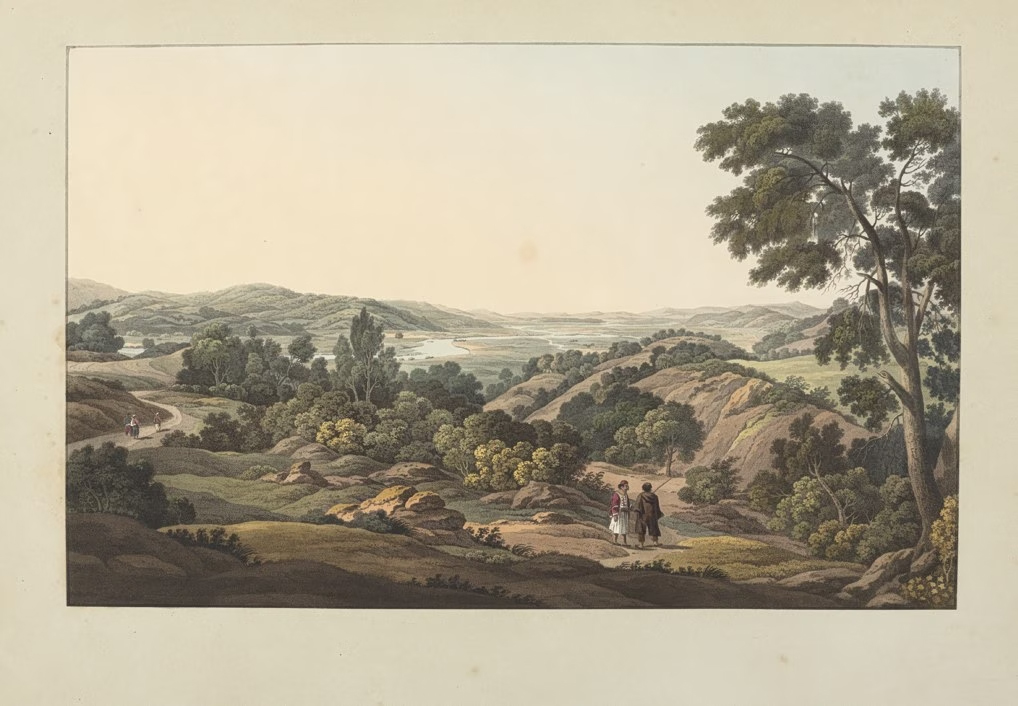
Visual and historical artifacts, such as old maps of the Eastern Mediterranean, travel albums, and depictions of Greece, illustrate how the country was perceived by foreigners.
Particular attention is given to figures of the Greek War of Independence, including portraits of fighters and especially women, such as Manto Mavrogenous, highlighting the role of women in history.
Overall, the exhibits create a living portrait of Greek history and intellectual creativity across different eras and perspectives.
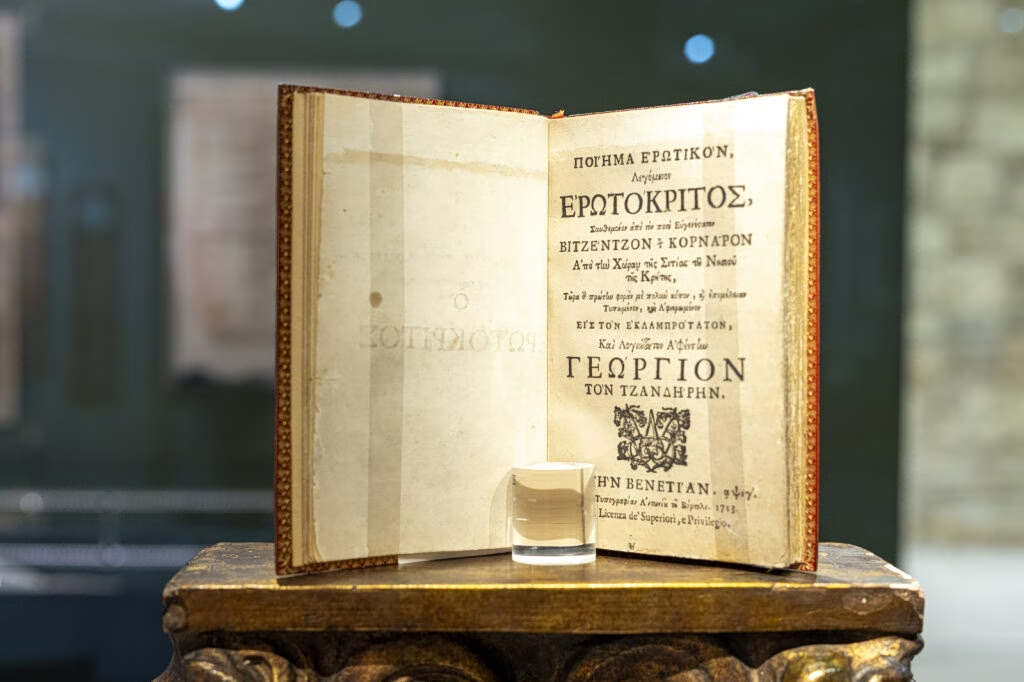
Among the treasures on display is the first edition of Erotokritos (1713), printed in Venice.
Gennadius 100 is intended not only for specialists or researchers but for any visitor interested in history, art, and culture. With free admission and a rich educational and research background, the exhibition offers a unique opportunity to explore an institution that has played a pivotal role in preserving and promoting cultural heritage.
Ultimately, the exhibition serves as a bridge between past and future, highlighting the enduring value of knowledge and research. Through it, the Gennadius Library reaffirms its position as one of Greece’s most significant intellectual centers, inspiring and shaping new generations of researchers and visitors.
Exhibition Information
Gennadius 100: A Century of Inspiration
I. Makrygiannis Wing, Gennadius Library
Duration: April 1 – July 26, 2026
Opening Hours: Wednesday, Friday, Saturday, Sunday: 12:00–18:00 | Thursday: 12:00–20:00
Admission: Free
Location: I. Makrygiannis Wing, Gennadius Library, 61 Souidias Street, 106 76 Kolonaki, Athens
Curators: Maria Georgopoulou, Director | Irini Solomonidi, Chief Librarian
Artistic Direction & Exhibition Design: Mikri Arktos, Vivi Gerolymatou & Andreas Georgiadis