
In Kakheti, September does not announce autumn with falling leaves or cooler evenings alone. It arrives through vineyards heavy with grapes, courtyards prepared for pressing, and family wine cellars waiting for the year’s harvest. Across the Alazani Valley, where rows of vines stretch towards the Caucasus Mountains, the season is known as Rtveli, the traditional Georgian grape harvest.
Rtveli is not simply an agricultural event or a festival created for visitors. It is a demanding period of work, preparation and community, shaped by customs that connect wine with family, hospitality, food and cultural identity. For travellers, this makes September one of the most revealing times to experience Kakheti, not because the region stages a performance, but because its relationship with wine becomes visible in everyday life.
Located in eastern Georgia, less than two hours by road from Tbilisi, Kakheti is the country’s principal wine-producing region. Its landscape moves between the fertile Alazani and Iori river basins, the mountains of the Greater Caucasus, historic villages, monasteries and small towns whose identities have developed alongside the vineyards surrounding them.
Yet Kakheti is not merely a wine destination. To travel through it is to encounter a culture in which wine belongs to the home, the table, religious and secular celebrations, and the stories families pass from one generation to the next.
When the vineyards set the rhythm
The precise timing of Rtveli changes according to the grape variety, location and weather. In Kakheti, harvesting generally begins around September and can continue into October, meaning that no two visits will unfold in exactly the same way.
Before the first grapes are picked, families and winemakers prepare their cellars, clean the vessels used for fermentation and organise the spaces where the harvest will be processed. Picking often begins early in the morning, before the strongest heat of the day. Grapes are collected along the vineyard rows and transported to the cellar, where they may be pressed in a traditional satsnakheli, a long wooden or stone winepress.
Georgia’s official tourism organisation describes Rtveli as a combination of agricultural work, ritual, music, food and communal celebration. Although harvest traditions exist throughout the country, the season begins in Kakheti, where viticulture remains central to rural life.
Some wineries and family guesthouses allow visitors to participate in grape picking, pressing, cooking or churchkhela-making. These experiences can offer genuine contact with the region’s culture, but they should be approached with respect. For the people hosting them, Rtveli is not simply entertainment. The quality of an entire year’s wine may depend on decisions made during a few intense weeks.
Harvest dates are also impossible to guarantee far in advance. Travellers hoping to participate should contact a winery or guesthouse directly, confirm what the experience includes and remain flexible if weather or grape maturity changes the schedule.
Wine made beneath the earth
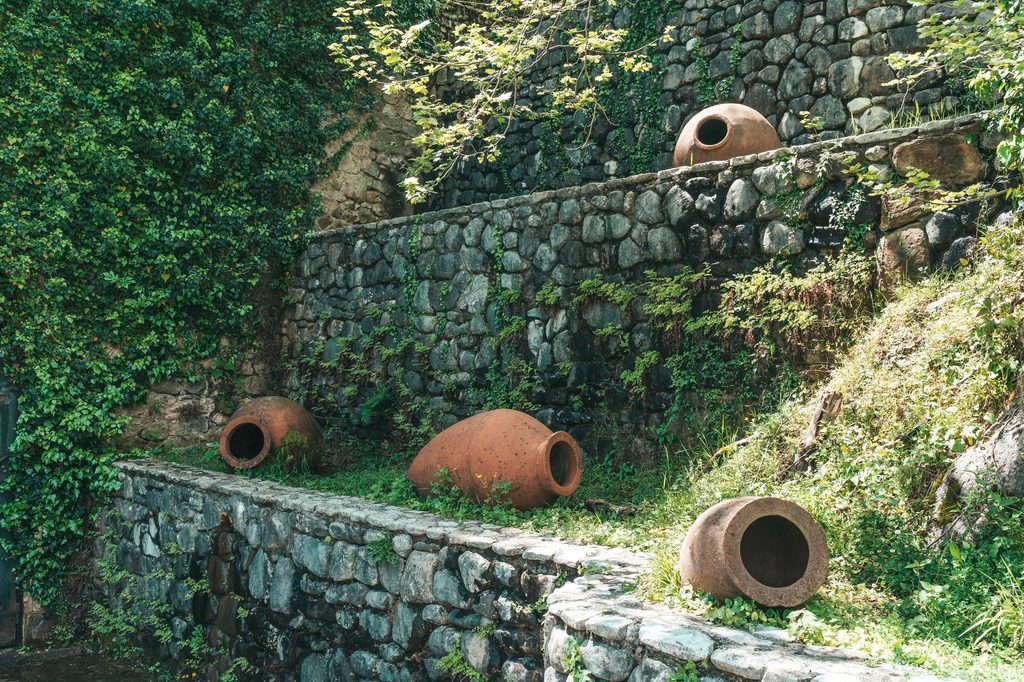
At the centre of Kakheti’s identity stands the qvevri, the large, egg-shaped earthenware vessel traditionally buried in the floor of a wine cellar, or marani. Grapes are pressed and the juice is placed inside the vessel, often together with skins and other solid parts of the fruit. The qvevri is then sealed, allowing the wine to ferment and mature beneath the ground.
The method produces wines that can feel unfamiliar to visitors accustomed only to stainless-steel tanks or wooden barrels. White grapes fermented in prolonged contact with their skins can develop deep amber tones, greater structure and flavours that move beyond conventional expectations of white wine. Red wines can emerge intense, earthy and firmly tannic.
In 2013, UNESCO inscribed the ancient Georgian qvevri wine-making method on the Representative List of the Intangible Cultural Heritage of Humanity. The recognition covers more than the vessel itself. It acknowledges the knowledge shared between families and communities, the communal character of harvesting and wine production, and the role wine continues to play in Georgian cultural life.
Georgia’s qvevri tradition is frequently connected to an approximately 8,000-year history of winemaking. What gives the practice its contemporary importance, however, is not age alone. It survives as an active method used by family producers and larger wineries, sometimes alongside modern European-style production. It is not a preserved museum technique but part of a living and evolving wine culture.
The grapes that define Kakheti
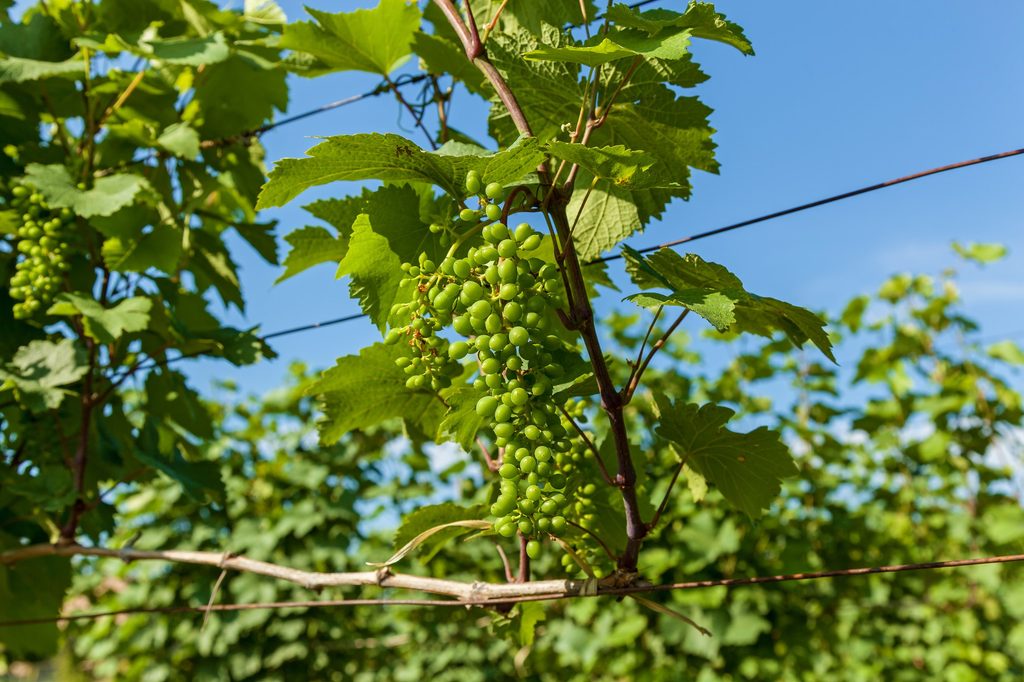
Kakheti’s wine identity is inseparable from its native grape varieties and the different microzones of the Alazani Valley.
Saperavi, whose name is associated with colour or dye, is Georgia’s leading red grape variety. It can produce dry, semi-sweet and other styles of wine, ranging from deeply coloured, structured expressions to fresher interpretations shaped by cooler sites. Important Kakhetian wines based on Saperavi include Mukuzani, Napareuli and Kindzmarauli.
Rkatsiteli, a native white variety widely cultivated across Kakheti, is used in both traditional qvevri wines and European-style production. When made in qvevri, it can develop more pronounced tannins and flavours associated with dried fruit, spice, honey and citrus peel. Other regional varieties, including Kakhuri Mtsvane, Kisi and Khikhvi, add further diversity to Kakheti’s wine landscape.
This variety means that a tasting in Kakheti should not be treated as a search for one definitive “Georgian wine.” A family cellar producing a small quantity in qvevri may offer something very different from an established winery combining traditional techniques with contemporary equipment.
The contrast is part of the region’s character. Kakheti does not require travellers to choose between heritage and modernity. Both can exist within the same landscape, sometimes within the same cellar.
Between Telavi and the Alazani Valley
For travellers who want to understand the region rather than rush through it on a day tour, Telavi provides a natural base. As Kakheti’s principal city, it brings together markets, historic architecture, wine cellars and access to the wider Alazani Valley.
Telavi’s streets and courtyards feel closely connected to the surrounding countryside, while the palace of King Erekle II offers a historical perspective beyond wine. The city is small enough to explore without haste but central enough for visits to vineyards, villages and cultural monuments across the region.
Around thirty minutes from Telavi stands Alaverdi Monastery, an important example of Georgian religious architecture. Its 11th-century cathedral rises above the valley, framed by vineyards and the Caucasus Mountains. The monastery complex also includes a historic wine cellar, reinforcing the long relationship between Georgian spiritual life and viticulture.
The journey through Kakheti becomes as significant as the individual stops. Roads cross open agricultural land, villages, orchards and vineyards, while the mountains remain a constant presence along the northern horizon. During the harvest, tractors, baskets and vehicles carrying grapes become part of the everyday traffic of the valley.
This is one reason Kakheti deserves more than a hurried excursion from Tbilisi. Its atmosphere lies in the transitions between vineyard and village, cellar and family table, not in a single landmark.
Sighnaghi above the vineyards
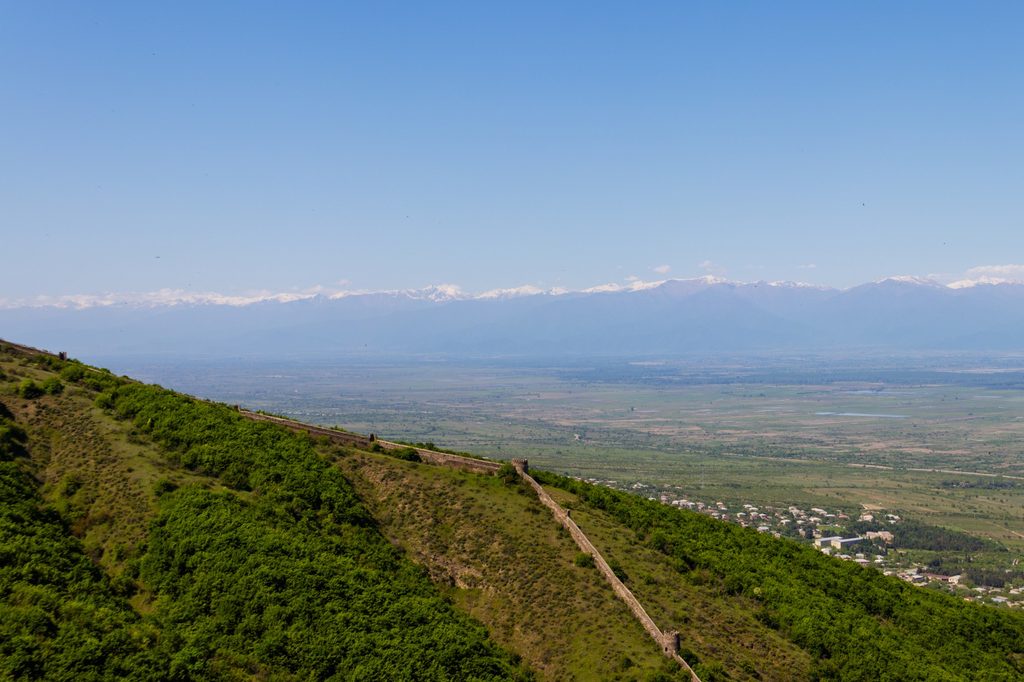
On the eastern side of the region, Sighnaghi looks across the Alazani Valley from a hillside enclosed by historic fortifications. Its red-tiled roofs, carved balconies and cobbled streets have made it one of Kakheti’s most photographed towns, but its appeal extends beyond appearances.
The defensive wall surrounding Sighnaghi was constructed during the reign of King Erekle II in the 18th century. Sections can still be walked, opening broad views across the valley towards the Caucasus. The town also provides access to family-run restaurants, wine cellars, the Sighnaghi Museum and the nearby Bodbe Monastery.
Sighnaghi is often promoted as Georgia’s “City of Love,” but September gives it another identity. Seen against a landscape in the middle of harvest, the town becomes an elevated viewpoint over the agricultural life that has shaped Kakheti for generations.
It works particularly well as part of a slower itinerary rather than a quick photographic stop. An evening in Sighnaghi, once day visitors have departed, allows the setting to regain some of its quietness and makes room for the long meals that are central to Georgian hospitality.
The table as part of the journey
In Kakheti, wine rarely appears alone. It arrives with bread, herbs, cheese, grilled meat and dishes intended to be shared. Regional specialities include mtsvadi, meat cooked over an open fire; chakapuli, an aromatic stew traditionally prepared with herbs; and khashlama, slow-cooked meat served with relatively simple seasoning. Sweet churchkhela and tatara make use of concentrated grape juice, connecting the harvest to the region’s desserts as well as its wine.
A Georgian supra, or feast, may continue for hours, guided through a sequence of toasts and shared dishes. For a visitor, it can initially appear abundant to the point of excess, but its structure expresses something deeper about hospitality. The meal creates a space in which family, memory, friendship and respect for guests are articulated through food, wine and speech.
The most memorable Kakhetian experiences are therefore not necessarily the most polished tastings. They may take place at a long table in a family courtyard, in a cellar where the winemaker explains why each qvevri behaves differently, or during a meal in which translation is imperfect but generosity is unmistakable.
Experiencing Kakheti without reducing it to wine tourism
The increasing international interest in Georgian wine has brought new opportunities to Kakheti. Restored estates, boutique hotels, tasting rooms and organised wine routes have made the region easier to explore. At the same time, travellers should distinguish between meaningful participation and experiences designed only to reproduce an attractive image of rural life.
A good visit leaves time to speak with producers, understand whether their wines are made in qvevri or by another method, and learn how the harvest affects the household or business. Purchasing directly from a small producer, eating local food and staying overnight in the region can create a stronger local contribution than moving rapidly between several tastings in a single afternoon.
Wine should also be only one part of the journey. Kakheti contains monasteries, museums, protected landscapes and hiking areas, as well as towns and villages shaped by a history of trade, agriculture, religion and invasion. The vineyards provide continuity, but they do not tell the entire story.
Planning a September journey
A three- or four-night stay allows enough time to experience Kakheti without turning the region into a checklist. Telavi is practical for exploring the central and northern sections of the valley, while Sighnaghi provides a smaller, more atmospheric base in the east.
Travelling by car offers the greatest flexibility, although anyone planning multiple tastings should arrange a driver or join a small organised tour. Visits to family wineries should be booked in advance, particularly during Rtveli, when producers are at their busiest and may not be able to welcome unexpected guests.
September can still feel like summer during the day, but temperatures vary across the region and evenings may be cooler. Comfortable footwear is useful for vineyards, cobbled streets and monastery grounds, while modest clothing should be carried when visiting religious sites.
Most importantly, travellers should arrive without expecting the harvest to follow a fixed tourism calendar. Rtveli begins when the grapes are ready. That uncertainty is not an inconvenience added to the experience; it is part of what makes the experience genuine.
A landscape shaped by continuity
Kakheti in September offers something increasingly rare in popular wine destinations: the opportunity to see a celebrated cultural tradition functioning as part of ordinary life.
The qvevri may now appear in international wine bars and specialist restaurants far beyond Georgia, but here it remains connected to the soil in which it is buried, the families who clean and fill it, and the vineyards that determine what each year will bring.
Travelling through Kakheti during Rtveli is therefore not only about tasting wine. It is about observing how a landscape, a harvest and a culture continue to shape one another. The vineyards provide the setting, but the real journey takes place around the cellar and the table, where history is not displayed behind glass. It is poured, shared and carried forward.