
Mani is not a place that asks to be visited. It simply exists — and December makes that fact impossible to ignore. This is a region shaped less by welcome and more by endurance. The mountains fall abruptly into the sea, the land resists cultivation, and the built environment reflects centuries in which survival mattered more than comfort. To travel through Mani in winter is to encounter a part of Greece that has never softened itself for the visitor. There is no seasonal spectacle to dilute the experience, no crowds to buffer its severity. What remains is a landscape that demands attention, patience, and a willingness to move at its pace.
December reveals Mani without mediation. Villages slow down. Distances feel longer. Stone darkens under winter skies, and silence becomes an active presence rather than an absence. This is not a destination for distraction. It is a place that rewards observation over consumption.
Historically isolated and fiercely autonomous, Mani developed a social and architectural identity unlike any other region in Greece. Clan-based structures, internal conflicts, and the constant need for defense shaped daily life for centuries. Tower houses rose not as symbols of status, but as vertical fortresses — practical responses to a land where alliances were fragile and survival was deeply personal. In winter, when the region returns to its essential rhythm, this history is felt rather than explained.
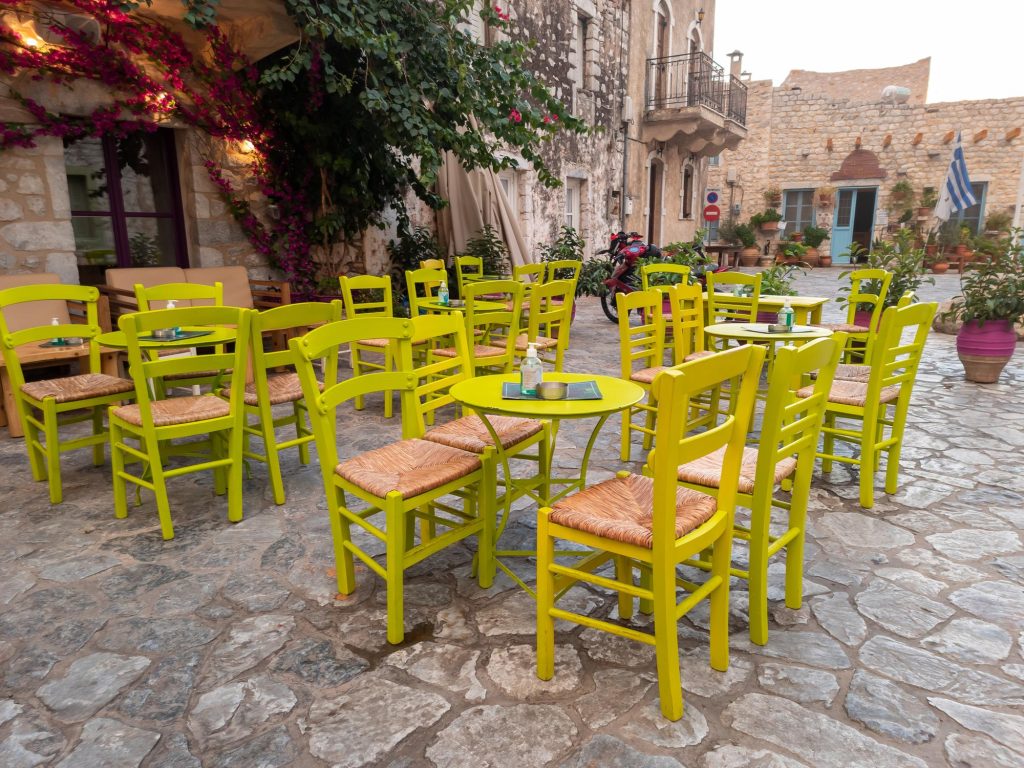
Areopoli marks a subtle transition. Not because it simplifies Mani, but because it introduces its logic gradually. In December, the town feels grounded and unembellished. Stone-paved streets hold the moisture of cold air. Cafés operate quietly, serving residents rather than passersby. Evenings arrive early, drawing life inward instead of pushing it outward.
This is where the pace adjusts. Conversations stretch. Time does not slow dramatically — it simply stops being hurried.
Moving south toward Limeni, the relationship between land and sea becomes more pronounced. The water remains clear, but winter gives it depth and weight. Limeni, often defined by summer brightness, turns inward during December. Fishing boats rest in the harbor. Taverns remain open, but meals are purposeful rather than performative. There is no attempt to impress — only to sustain daily life.
Further along the road, settlements grow more austere. Stone dominates every surface. Color recedes. Villages like Vathia stand as concentrated expressions of Mani’s defensive past. Tower houses rise close together, shaped by necessity rather than design. In winter, without noise or movement, the settlement reads less as a village and more as a historical record written in stone.
Walking through Vathia in December requires attentiveness. Silence here is not empty. It carries memory — of conflict, isolation, and endurance. Photography feels secondary to presence. This is a place that asks to be walked slowly, without agenda.
Museums provide context without distraction. The Archaeological Museum of Areopoli, typically accessible year-round, connects Mani’s harsh geography with its long social evolution. Exhibits focus on daily life, warfare, and survival, reinforcing the understanding that this landscape shaped its people as much as they shaped it.
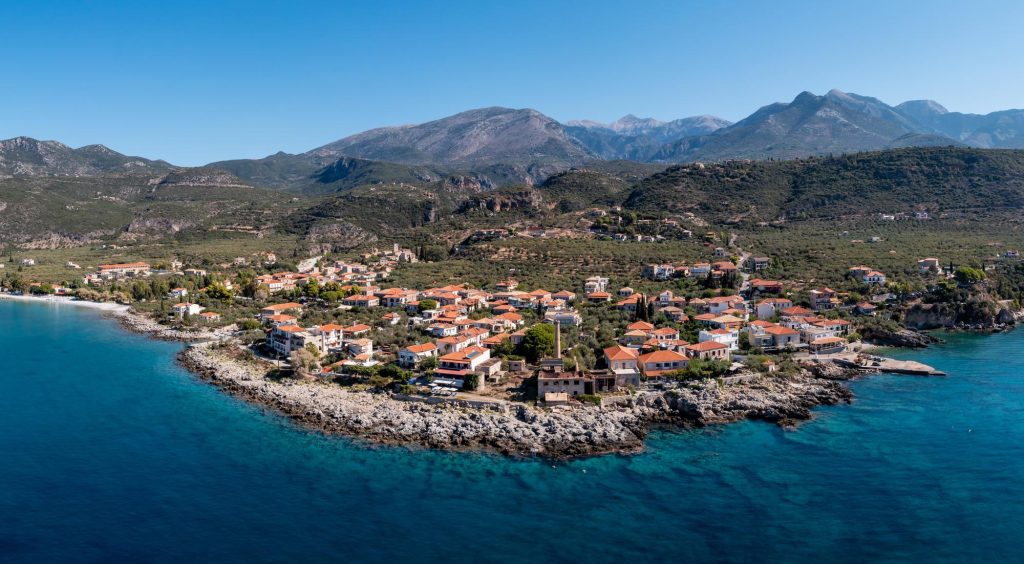
Further north, Kardamyli introduces a different register. In December, it reveals its historical and intellectual layers more clearly. The Old Town maintains its medieval character, its stone paths and fortifications echoing Mani’s broader narrative. The Patrick Leigh Fermor house, when accessible on winter weekends or selected days, offers a cultural counterpoint rooted in observation rather than romanticism. Even when closed, its presence reflects a dialogue between landscape and thought that continues to define the area.
Winter also allows space for movement. Coastal paths near Kardamyli and Stoupa invite long, uninterrupted walks. The Taygetos Mountains descend sharply into the sea, their presence intensified under winter light. The air is clean, sharp, and clarifying. Without summer heat, the body moves deliberately, in rhythm with the terrain.
As the road continues south, settlements thin out and the land opens up. The sense of exposure grows gradually, mirroring Mani’s historical isolation. Approaching Cape Tainaron, the landscape becomes elemental. Winter winds move freely, and the sea feels vast and indifferent. The path toward the lighthouse, often quiet in December, becomes less a destination and more a process — a walk shaped by distance, weather, and reflection.
In antiquity, this was believed to be an entrance to the underworld. In winter, the idea feels less symbolic and more intuitive. The land does not soften itself here.
Evenings across Mani belong indoors. Taverns close early. Streets empty. Homes glow faintly behind thick stone walls. This rhythm is not inconvenient — it is instructive. Mani teaches restraint, attentiveness, and respect for limits.
Traveling through Mani in December requires acceptance. Some places may be closed. Some routes may feel abandoned. But unpredictability has always been part of the region’s reality. Mani does not accommodate expectations — it reshapes them.
What it offers instead is clarity. Without distraction, the region speaks directly. Its history is not curated. Its beauty is not staged. It simply remains.
Mani in winter does not entertain.
It explains itself — quietly, firmly, and on its own terms.