
The life of George Fexis (1866-1936), one of the most important publishers and booksellers in modern Greece, is an extraordinary story of innovation, entrepreneurial daring, and cultural contribution. From a young boy selling books on the streets of Athens, he managed to create one of the most successful publishing houses in the country, with groundbreaking actions that changed the dissemination of knowledge and the publishing market.
By Zeta Tzioti
Childhood and Family Legacy
George Fexis was born in 1866 in Constantinople as the first of five children of Dimitrios Fexis, who owned a printing press. From a very young age, George worked at his family’s printing business. When the family moved to Athens, he continued to work alongside his father. Despite his father’s expectations for him to take over the family printing business, George decided to follow his own entrepreneurial path and establish his own bookstore.
Beginning of the Entrepreneurial Journey
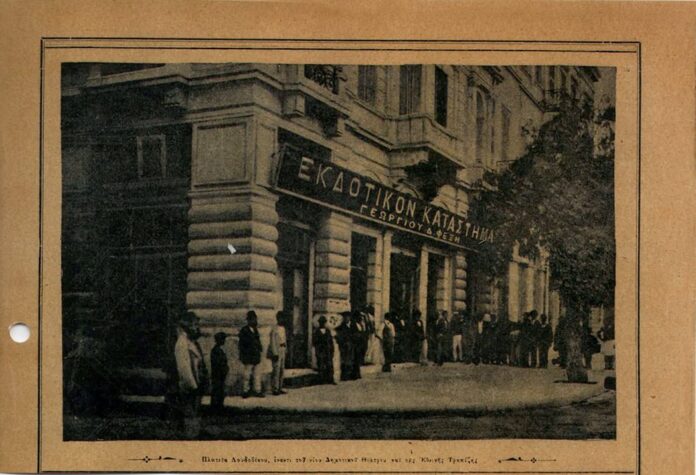
At just 18 years old, George Fexis decided to take to the streets of Athens and sell books to passersby. One morning, he appeared on Aeolus Street, in front of the National Bank, advertising a book that was being distributed as a pamphlet. The sight of a young man selling books on the sidewalk was innovative and unprecedented at the time. However, his entrepreneurial courage made him stand out and catch the attention of the public.
His success on the streets encouraged him to open his first bookstore. With the help of his father and the family printing press, George managed to publish and distribute significant books to the market, such as “Pope Joan” by Emmanouil Roidis and “The Franco-German War of 1870-1871.” His publishing program included both literary works and scientific publications.
Innovations and Overturning Traditional Models
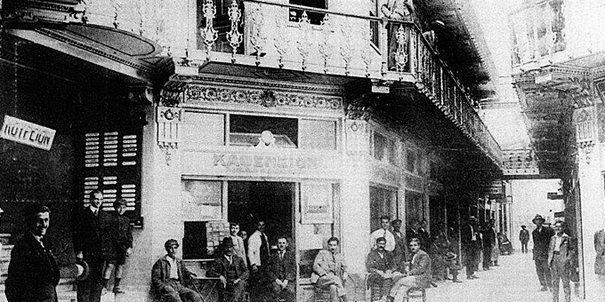
Fexis’s true innovation was introducing the installment payment system for book sales. At a time when booksellers typically required immediate payment, Fexis offered customers the option to pay for books in monthly installments. This initiative was met with resistance from traditional booksellers, who predicted that Fexis’s business would lead to bankruptcy. However, the public greeted the proposal enthusiastically, and George Fexis’s bookstore became highly successful.
Additionally, Fexis introduced a strategy of continuous advertising through the press, something innovative for that era. By viewing the book market as part of a broader product market, he began to publish regular ads in newspapers for his new releases, often accompanied by comments or stories related to the works. This promotional tactic helped create strong demand for his books and spread the reputation of his publishing house.
Thematic Libraries and Expanding Knowledge Domains
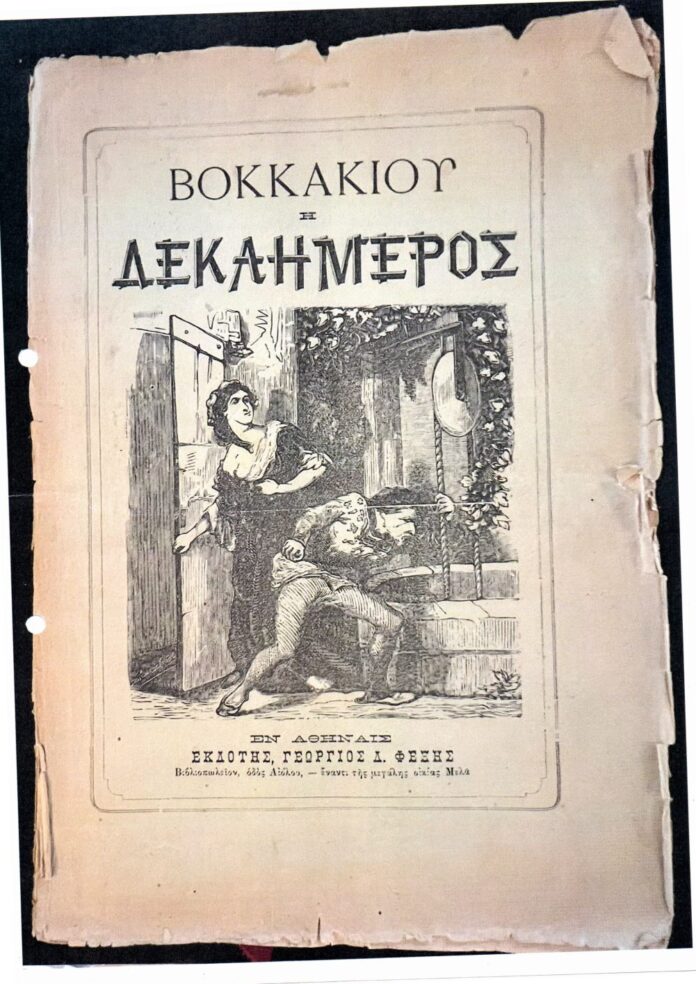
As his business grew, George Fexis decided to make his books accessible to an even broader audience. He established “thematic libraries” covering a wide range of knowledge areas. From literature to politics and legal science, these libraries aimed to offer readers a comprehensive collection of high-quality works at affordable prices. Some of the most notable libraries included the “Literary Library,” the “Philosophical and Sociological Library,” and the “War Library.”
The success of these libraries was due to the affordable prices of the publications, which were usually pamphlets of 80-120 pages. George Fexis ensured that his editions were accessible to the general public, thereby enhancing the dissemination of knowledge and intellectual cultivation.
Expansion into New Sectors: Music and Illustrated Postcards
Fexis’s entrepreneurial spirit did not stop at books. In the early 20th century, he decided to expand his activities into the music sector. By establishing a music store on Stadiou Street, Fexis began offering musical instruments, such as pianos and violins, with the same installment payment system. His musical venture was another success, as it offered Greek households the opportunity to acquire musical instruments that were previously difficult to obtain.
Moreover, Fexis entered the market for illustrated postcards, which were particularly popular in Greece at the time. The series of postcards he published featured landscapes, ancient monuments, and important sites of Greek history and everyday life, capturing the interest of the public.
The Fexis Building and the Construction of a Multi-Story Building

At the peak of his entrepreneurial journey, George Fexis decided to build a large multi-story building in Athens that would house shops and offices. The Fexis Building, completed in 1920, was the first building in Athens constructed with reinforced concrete (béton armé) and included 48 shops and 32 offices. This building was a revolutionary concept for the time and served the growing needs of the city’s commercial center.
Legacy and End
George Fexis passed away in 1936, leaving behind a rich legacy. His business not only disrupted the Greek book market but also revolutionized the way knowledge and culture were disseminated. From the boy selling books on the street, he evolved into one of the most successful entrepreneurs of his time. His story is a triumph of personal and business vision and remains an inspiration for those who seek to innovate and change the dynamics of the market.
Source:
Kostas Ch. Chatziotis archive. Kostas Chatziotis is an academic, historian, and researcher of the History of Athens.